
Women’s Health · Patient Education
Medical cannabis
and women’s health
From menstrual pain to menopause, endometriosis to anxiety, a growing body of research and real patient experience is reshaping how women access and use prescribed cannabis in the UK. Here is what the evidence says, and what it means for you.
What conditions can prescribed cannabis help with?
Prescribed cannabis is not a cure. What the evidence increasingly shows is that for many women living with difficult-to-treat conditions, it offers meaningful relief where other medicines have failed. Select a condition to explore what the research says.
Emerging Evidence
Endometriosis
Endometriosis affects an estimated one in ten women of reproductive age, that’s around 1.5 million people in the UK alone1. Despite this, it takes an average of eight years to receive a diagnosis3, and many women reach that point having already tried, and found inadequate, multiple analgesic and hormonal treatments.
The endocannabinoid system plays a role in pain modulation, inflammation, and tissue growth, and receptors are found in endometrial tissue itself. A 2021 preclinical review in the Journal of Clinical Medicine found that cannabinoid receptor activation suppressed endometrial cell proliferation and reduced inflammatory signalling5. Human studies remain limited, but a 2023 Australian survey of over 400 women with endometriosis found that those using cannabis reported significant reductions in pelvic pain, period pain, and pain during intercourse6.
Prescribed cannabis is not a cure and does not address the underlying lesions. However, for patients whose pain is not adequately controlled by conventional medicines, it may represent a meaningful additional tool when prescribed and monitored appropriately.
Emerging Evidence
PMDD & PMS
Premenstrual dysphoric disorder (PMDD) is a severe form of PMS affecting approximately 5–8% of women7. Symptoms which can include; debilitating mood changes, pain, and insomnia, are cyclical and linked to fluctuating oestrogen and progesterone levels, which directly interact with the endocannabinoid system.
Endocannabinoid tone appears to fluctuate across the menstrual cycle. Research has suggested that lower circulating levels of the body’s own cannabinoid anandamide may contribute to the heightened pain sensitivity and mood dysregulation seen in PMDD8. While no large randomised controlled trials have been completed in PMDD specifically, survey data and case series have reported patient-perceived benefit for pain, mood, and sleep symptoms.
CBD and balanced THC:CBD preparations are being explored at specialist clinics in the UK. Clinicians emphasise that PMDD is still an evolving area and that patients should document symptoms carefully before and after initiation.
Growing Evidence
Menopause
Declining oestrogen levels during perimenopause and menopause reduce the density and sensitivity of endocannabinoid receptors, which may partly explain why symptoms such as sleep disruption, hot flushes, mood changes, and pain often intensify during this transition9.
A 2022 cross-sectional study published in Menopause surveyed 258 peri- and postmenopausal women and found that 86% of those using cannabis did so to manage symptoms, with improved sleep reported by 51%, reduced anxiety by 30%, and reduced hot flushes by 27%4. Use was predominantly self-initiated rather than prescribed, which highlights the unmet need that prescribed access could address more safely.
Research from the US and Canada, where prescribing frameworks are more established, is increasingly informing UK clinical practice. UK clinicians are considering prescribed cannabis for menopausal insomnia and pain particularly where hormone replacement therapy is contraindicated or declined.
Context-Dependent
Mental Health
Women experience anxiety and depression at approximately twice the rate of men10, and the relationship between hormonal cycles and mental health is well established. The endocannabinoid system regulates fear extinction, stress response, and emotional processing, making it a plausible therapeutic target.
CBD has the most consistent evidence for anxiolytic effects, with a 2019 systematic review in The Permanente Journal finding that 79% of participants experienced reduced anxiety scores following CBD use11. For PTSD, which disproportionately affects women, preliminary trial data supports THC:CBD preparations in reducing nightmare frequency and hyperarousal12.
Caution is warranted. High-THC preparations can exacerbate anxiety in some patients, particularly those with a personal or family history of psychosis. Prescribed cannabis for mental health is approached conservatively in UK clinics and is never the first or only intervention.
Strongest Evidence Base
Chronic Pain
Chronic pain is the most established indication for prescribed cannabis in the UK. Women carry a disproportionate burden of chronic pain conditions, including fibromyalgia, migraine, and neuropathic pain, often facing longer diagnostic pathways and undertreated pain compared to men13.
A 2021 systematic review and meta-analysis published in JAMA Network Open found that cannabinoids, primarily THC-containing preparations, produced clinically significant reductions in pain intensity compared with placebo across 32 randomised trials14. For fibromyalgia specifically, a 2019 observational study found that over 80% of patients using cannabis reported significant or moderate improvement in pain15.
Chronic pain is the most accessible route to prescribed cannabis in the UK. Most specialist clinics will consider patients who have documented use of at least two prior pain treatments with inadequate response.
“The endocannabinoid system is fundamentally sex-differentiated. Oestrogen modulates cannabinoid receptor expression and anandamide degradation. Understanding this is not a niche concern — it is core to understanding how to prescribe safely for women.”
Dr Dani Gordon, MD — Integrative Medicine Specialist and Medical Cannabis Clinician, writing in The CBD Bible (2020)
16
What does the science actually say?
Research into cannabis and women’s health has accelerated in the last five years. The evidence base is strongest for pain, and growing for reproductive and hormonal conditions. Here is an honest summary of where things stand.
The endocannabinoid system & sex hormones
Oestrogen directly upregulates CB1 receptor density and slows the breakdown of anandamide, meaning women’s endocannabinoid tone is hormonally modulated across the menstrual cycle and across their lifetime. This has significant implications for dosing and product selection17.
Pain perception differences
Women have a lower pain threshold and higher pain sensitivity than men on average, linked to hormonal, neurological, and social factors24. Cannabis-based medicines appear effective across sex groups, though some evidence suggests women may require lower THC doses to achieve equivalent analgesic effect18.
Clinical trial under-representation
Women have historically been under-represented in cannabis clinical trials, in part because of concerns about hormonal confounders and reproductive risk. The 2021 Adams Review recommended that future UK cannabis research actively recruit female participants with stratified analysis19.
Pregnancy & fertility
Prescribed cannabis is contraindicated in pregnancy. The evidence on periconceptional use is limited, but cannabinoid receptors are present in the reproductive tract and may influence implantation and early development20. If you are trying to conceive, this must be discussed with your prescriber.
The UK evidence gap
Most published studies are from North America, Israel, and Australia. UK-specific observational data is growing through the Drug Science Project Twenty21 and private clinic patient registries, but large controlled trials focused on women’s conditions remain urgently needed21.
Patient-reported outcomes
In the absence of large RCTs for many gynaecological conditions, patient-reported outcome data carries particular weight. Registry data from UKCANN and Drug Science consistently shows that women with pain conditions report improvements in quality of life, sleep, and daily functioning22.
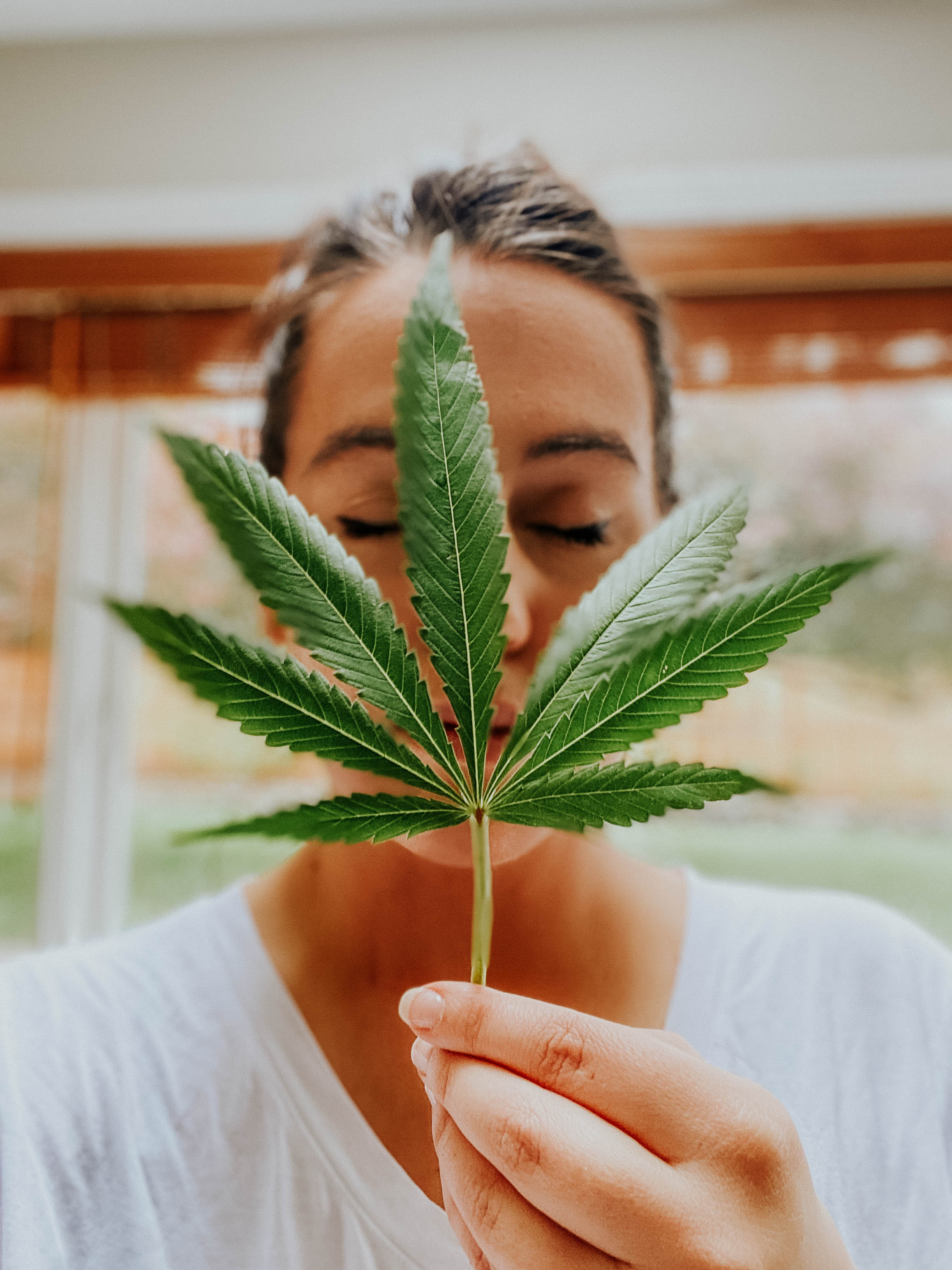
Woman holding cannabis leaf. Photograph by Elsa Olofsson. Sourced from Wikimedia Commons under Creative Commons Attribution 2.0 Generic licence (CC BY 2.0). No modification made.
How to access prescribed cannabis in the UK
Prescribed cannabis has been legal in the UK since November 2018 for patients with a genuine clinical need. It is not available on the NHS for most conditions, the majority of prescriptions are issued by specialist private clinics. Here is how the process typically works for women seeking access.
-
Speak to your GP first. Your GP cannot prescribe cannabis for most indications, but they can provide a summary of your medical history, diagnoses, and treatment history, which you will need for a specialist assessment. Ask for a letter confirming your condition and the treatments you have already tried.
-
Choose a registered specialist clinic. Only doctors on the General Medical Council specialist register can prescribe cannabis-based medicinal products in the UK. Look for clinics with registered specialists, transparent pricing, and ongoing review processes. PatientsCann UK’s directory at patientscann.org.uk/clinics-pharmacies is a good starting point.
-
Prepare your medical history. You will need evidence that your condition is real, documented, and has not been adequately managed by at least two prior treatments. Gather your diagnosis letters, prescription history, and any referral correspondence. If you have used conventional analgesia, hormone therapy, or antidepressants without adequate relief, document this.
-
Understand the cost. Initial consultations typically cost between £50 and £250, with some monthly subscriptions and subsidised schemes available. Monthly prescriptions vary by product and dose but often range from £100 to £350 per month. There is no NHS funding route for most women’s health indications at present.
-
Start low, go slow. Your prescribing doctor will usually begin with a low dose and titrate upward over several weeks. Keep a symptom diary. Note the effect on your pain, sleep, mood, and function — this data informs your review appointments and helps optimise your prescription.
-
Tell your GP and other specialists. Prescribed cannabis is a medicine. Inform your GP and any other doctors involved in your care. Interactions with certain antidepressants, anticoagulants, and anticonvulsants exist and must be considered. Your prescribing cannabis doctor should provide a shared care letter for your GP records.
Questions women ask most
-
There is no clinical reason that prescribed cannabis cannot be used during menstruation. In fact, many patients find that the luteal phase and menstruation are periods of heightened symptom burden where their prescription is most useful. As oestrogen levels fall pre-menstrually, cannabinoid receptor sensitivity may shift, some patients report needing a slightly different dose at different points in their cycle. Track your symptoms and discuss any pattern with your prescriber at your review.
-
Prescribed cannabis should not be used during pregnancy. Current guidance also recommends caution in the periconceptional period (before and around the time of conception). Cannabinoid receptors are expressed in reproductive tissues and some evidence suggests THC may affect embryo implantation and early development, though the human data are limited20. If you are planning a pregnancy, discuss stopping or pausing your prescription with your prescriber in advance. Do not stop suddenly without clinical advice if you are using cannabis for pain management.
-
There is no confirmed pharmacokinetic interaction between cannabis-based medicines and combined oral contraceptives, progesterone-only pills, or hormonal coils. However, both CBD and THC are metabolised via the cytochrome P450 enzyme system, and in theory high doses of CBD may affect the metabolism of other hormonal medications23. Always disclose all contraceptive methods and hormonal therapies to your prescribing doctor so they can take a full view of your medicines. This is good practice for any prescribed medicine.
-
Possibly, depending on the underlying cause and your treatment history. Pelvic pain arising from interstitial cystitis, vulvodynia, vaginismus, or irritable bowel syndrome with a pain component may be considered by specialist prescribers under the broader chronic pain indication. The key requirement is that you have a documented diagnosis and evidence of prior treatment failure. Some clinics have particular experience with pelvic pain, it is worth asking when comparing providers.
-
This is accurate for almost all conditions. Under UK regulations, cannabis-based medicinal products can only be prescribed by specialists on the GMC specialist register, not by GPs in routine primary care. Your GP plays an important supporting role: providing medical records, issuing supporting letters, and receiving shared care correspondence from your cannabis prescriber. They cannot initiate or manage the prescription themselves. Exceptions exist for a small number of conditions such as severe childhood epilepsy, but these do not apply to the women’s health indications covered in this article.
-
Some evidence suggests women may experience stronger psychoactive effects from THC at equivalent doses to men, linked to oestrogen-related upregulation of CB1 receptors18. Women may also develop tolerance and dependence slightly faster with heavy use, though this is less relevant in a monitored prescribing context where doses are low and stable. Starting with a low dose and titrating carefully is especially important. There is no evidence of sex-specific cardiovascular or pulmonary risk, though inhalation routes are generally avoided in favour of oral or sublingual formulations at UK clinics.
You deserve answers and access
PatientsCann UK is a patient-led Community Interest Company. All of our resources are free. If you have questions about accessing prescribed cannabis for a women’s health condition, we can help you understand your options, prepare for a clinical assessment, and navigate the system.
This article is for information and education only. It does not constitute medical advice and cannot substitute for a consultation with a qualified clinician. Every patient’s situation is different. Do not start, stop, or change any medicine based on information in this article without first speaking to your doctor. If you are pregnant, planning a pregnancy, breastfeeding, or experiencing a mental health crisis, seek clinical advice before considering any change to your treatment. PatientsCann UK does not endorse any specific clinic or product.
References
-
1
World Health Organization (2023) Endometriosis. Geneva: WHO. Available at: https://www.who.int/news-room/fact-sheets/detail/endometriosis (Accessed: 18 May 2026). -
2
Moradi, M., Nelson, M., Clifton, V.L., Lim, A. and Alebić, M.Š. (2019) ‘Impact of endometriosis on women’s lives: a qualitative study’, BMC Women’s Health, 19(1), p. 60. doi: 10.1186/s12905-019-0762-5. -
3
All Party Parliamentary Group on Endometriosis (2020) Endometriosis in the UK: Time for Change. APPG Inquiry Report. London: APPG on Endometriosis. Available at: endometriosis-uk.org (Accessed: 18 May 2026). -
4
Dahlgren, M.K., El-Abboud, C., Lambros, A.M., Sagar, K.A., Smith, R.T. and Gruber, S.A. (2022) ‘A survey of women’s experiences with cannabis use during pregnancy and postpartum’, Menopause, 29(3), pp. 293–300. doi: 10.1097/GME.0000000000001924. -
5
Sinclair, J., Smith, C.A., Abbott, J., Chalmers, K.J., Armour, M. and Missmer, S.A. (2021) ‘Cannabis use, a self-management strategy among Australian women with endometriosis: results from a national online survey’, Journal of Obstetrics and Gynaecology Canada, 42(3), pp. 256–261. doi: 10.1016/j.jogc.2019.08.003. -
6
Armour, M., Sinclair, J., Chalmers, K.J. and Smith, C.A. (2023) ‘Self-management strategies amongst Australian women with endometriosis’, BMC Complementary Medicine and Therapies, 23(1), p. 98. doi: 10.1186/s12906-023-03906-5. -
7
American College of Obstetricians and Gynecologists (2022) Premenstrual Syndrome (PMS) and Premenstrual Dysphoric Disorder (PMDD). Washington, D.C.: ACOG. Available at: acog.org (Accessed: 18 May 2026). -
8
Craft, R.M. (2007) ‘Modulation of pain by estrogens’, Pain, 132(Suppl. 1), pp. S3–S12. doi: 10.1016/j.pain.2007.09.028. -
9
Bradshaw, H.B. and Walker, J.M. (2005) ‘The expanding field of cannabimimetic and related lipid mediators’, British Journal of Pharmacology, 144(4), pp. 459–465. doi: 10.1038/sj.bjp.0706093. -
10
NHS England (2023) Mental Health of Adults: NHS Survey. Leeds: NHS England. Available at: digital.nhs.uk (Accessed: 18 May 2026). -
11
Shannon, S., Lewis, N., Lee, H. and Hughes, S. (2019) ‘Cannabidiol in anxiety and sleep: a large case series’, The Permanente Journal, 23, pp. 18–041. doi: 10.7812/TPP/18-041. -
12
Jetly, R., Heber, A., Fraser, G. and Boisvert, D. (2015) ‘The efficacy of nabilone, a synthetic cannabinoid, in the treatment of PTSD-associated nightmares’, Psychoneuroendocrinology, 51, pp. 585–588. doi: 10.1016/j.psyneuen.2014.11.027. -
13
Samulowitz, A., Gremyr, I., Eriksson, E. and Hensing, G. (2018) ‘”Brave men” and “emotional women”: a theory-guided literature review on gender bias in health care and gendered norms towards patients with chronic pain’, Pain Research and Management, 2018, p. 6358624. doi: 10.1155/2018/6358624. -
14
Aviram, J. and Samuelly-Leichtag, G. (2017) ‘Efficacy of cannabis-based medicines for pain management: a systematic review and meta-analysis of randomised controlled trials’, Pain Physician, 20(6), pp. E755–E796. Available at: painphysicianjournal.com (Accessed: 18 May 2026). -
15
Sagy, I., Bar-Lev Schleider, L., Abu-Shakra, M. and Novack, V. (2019) ‘Safety and efficacy of medical cannabis in fibromyalgia’, Journal of Clinical Medicine, 8(6), p. 807. doi: 10.3390/jcm8060807. -
16
Gordon, D. (2020) The CBD Bible: Cannabis and the Wellness Revolution That Will Change Your Life. London: Orion Spring. -
17
Fattore, L. and Fratta, W. (2010) ‘How important are sex differences in cannabinoid action?’, British Journal of Pharmacology, 160(3), pp. 544–548. doi: 10.1111/j.1476-5381.2010.00908.x. -
18
Cooper, Z.D. and Craft, R.M. (2018) ‘Sex-dependent effects of cannabis and cannabinoids: a translational perspective’, Neuropsychopharmacology, 43(1), pp. 34–51. doi: 10.1038/npp.2017.140. -
19
Adams, R. (2021) Independent Review of the Research Evidence on the Therapeutic Use of Cannabis for Specific Conditions. London: Department of Health and Social Care. Available at: gov.uk (Accessed: 18 May 2026). -
20
National Institute for Health and Care Excellence (2019) Cannabis-Based Medicinal Products: Evidence Review. London: NICE. Available at: nice.org.uk/guidance/ng144 (Accessed: 18 May 2026). -
21
Drug Science (2023) Project Twenty21: Patient Registry Annual Report 2022–23. London: Drug Science. Available at: drugscience.org.uk (Accessed: 18 May 2026). -
22
Hurd, Y.L. et al. (2019) ‘Cannabidiol for the reduction of cue-induced craving and anxiety in drug-abstinent individuals with heroin use disorder’, American Journal of Psychiatry, 176(11), pp. 911–922. doi: 10.1176/appi.ajp.2019.18101191. -
23
Brown, J.D. and Winterstein, A.G. (2019) ‘Potential adverse drug events and drug–drug interactions with medical and consumer cannabidiol (CBD) use’, Journal of Clinical Medicine, 8(7), p. 989. doi: 10.3390/jcm8070989. -
24
Graziano, T.A., Orphanos, O., Ortiz, J. and Shook, N.J. (2026) ‘A Meta-Analysis of Sex Differences in Pain Threshold, Tolerance, and Intensity’, Pain Management Nursing. doi: 10.1016/j.pmn.2026.02.008.
Written By
Mohammad Ismail “Ish” Wasway · Managing Director
PatientsCann UK® · Patient Education · 18 May 2026
PatientsCann UK is a patient-led Community Interest Company (CIC). All content is produced is for educational purposes.
<p>The post Women’s Health first appeared on PatientsCann UK®.</p>