
Plastics and polymers are widely used materials in the manufacture of cannabis and hemp consumer products, including vessels, containers, bottles, bags, transfer lines, carts, pods, and other components. However, they are not typically associated with metal contamination of the cannabinoids being produced. By far the most common source of trace-element contamination is heavy metals in the soil, growing medium, or fertilizer. These metals can be taken up through the plant’s root system and ultimately find their way into leaves, shoots and flowers and, finally, into extracted cannabinoids.
A secondary source of metal contamination has also been shown to be from stainless steel vessels, containers and equipment used in the production process. In addition, metal components such as coils, atomizers, tanks, and electrical/battery connections used in vaping cartridges are of particular concern nowadays, as they can leach metal particles into vaping liquids due to manufacturing defects and/or long-term storage of the devices. Some of the metals used include stainless steel, nichrome, brass, solder, and other alloys.
However, it is well documented in the pharmaceutical industry that plastic materials used in manufacturing equipment can potentially contribute to elemental contamination of drug products. The United States Pharmacopeia (USP) has devoted several chapters to this issue.
So, if metal impurities in plastic materials are something the pharmaceutical industry takes seriously, why isn’t this receiving the same attention in the manufacture of cannabis consumer products?
To investigate this question, it is useful to first look at how the pharmaceutical industry approaches the problem—and then examine what evidence exists in the public domain indicating that it could also be an issue for cannabis manufacturers.
What Can the Pharmaceutical Industry Teach Cannabis Manufacturers?
Drug products can chemically interact with their associated packaging systems and with the plastic materials and components used during manufacturing, storage, and administration. It is therefore logical that these interactions should not adversely affect either the suitability of the drug product or the packaging system. While suitability for use encompasses many quality attributes, the impact of plastic materials on patient and consumer safety is particularly important.
To address these issues, the United States Pharmacopeia (USP) has developed general chapters covering the quality and suitability of plastic materials used in pharmaceutical applications, including:
- USP Chapter <661> — Plastic Packaging Systems and Their Materials of Construction Used in Pharmaceutical Manufacturing. [3]
- USP Chapter <1661> — Evaluation of Plastic Packaging and Manufacturing Systems and Their Materials of Construction With Respect to Their Impact on User Safety.
The Potential for Contamination
Pharmaceutical manufacturing involves numerous steps required to convert raw materials into an active pharmaceutical ingredient (API) and ultimately into a drug product. Many of these steps use components that are wholly or partly constructed from plastics or polymers.
These materials can also contain additives such as:
- antioxidants
- stabilizers
- lubricants
- plasticizers
- colorants
All of these materials have the potential to contain elemental impurities. It is therefore possible for raw materials, process streams, production intermediates, APIs, and finished drug products to come into contact with plastic components during manufacturing. These interactions can potentially introduce process-related impurities and alter the quality of the pharmaceutical product.
The issue becomes particularly important when plastic vessels are used in liquid storage systems, because the opportunity for interaction between the plastic and the liquid increases.
Manufacturers Have a Responsibility
The pharmaceutical industry places the responsibility on manufacturers to establish that plastic components and systems are suitable for their intended use.
This is accomplished through a comprehensive risk-assessment approach in which the materials are appropriately characterized, tested, and evaluated.
Among the criteria considered are:
- The components should be constructed from well-characterized materials intentionally selected for their intended use.
- Their general physicochemical properties should be established.
- Their biological reactivity should be appropriately evaluated.
- Their safety should be established through appropriate chemical testing, including extractables and leachables profiling, together with toxicological assessment of the results.
The question isn’t simply, “What plastic are we using?” The more important question is: “What can potentially come out of that plastic and enter the product?”
How Are Plastic Materials Tested?
Because pharmaceutical manufacturing uses a wide variety of plastic materials and exposes them to many different conditions, there is no single extraction procedure that perfectly represents every manufacturing situation. At the same time, it would be impractical to impose a substantial number of extraction conditions on every manufacturer. The pharmaceutical approach therefore uses a standardized set of extraction conditions designed to assess both organic and inorganic impurities.
USP Chapter <661.3> describes five model extraction methods shown in Table 1.
Table 1: Chemical extraction conditions used to evaluate the suitability of plastic components for the manufacture of drug products or substances.
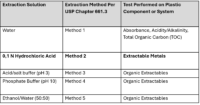
For the assessment of extractable metals, the plastic component is either filled with the test solution, or an appropriate amount of plastic is placed into a high-purity borosilicate flask containing the test solution.
The material is then heated to approximately 55 °C for 96 hours, cooled, and analyzed for relevant metals using ICP-OES or ICP-MS in accordance with USP Chapter <233>.
What Metals Are Important?
A well-characterized plastic or polymer should be tested for relevant metals that are known components of the material.
These metals can originate from:
- starting materials used to manufacture the plastic
- catalysts and other reagents
- stabilizers
- colorants
- plasticizers
- other additives
Relevant metals have been identified in compendial and regulatory documents, such as USP Chapter <232> [6] and ICH Q3D guidelines [7], which lists 24 elemental impurities and permitted daily exposure (PDE) limits in micrograms (µg) according to the route of administration and the toxicity of the element as shown in Table 2.
Table 2: USP Chapter 232 and ICH Q3D guidelines permitted daily exposure (PDE) limits for elemental impurities [6,7]. Note: These values are typically based on 10g maximum of the drug product per day, so they should be divided by 10 to calculate the allowable limit in µg/g in the drug product.

The potential significance of a metal depends not only on its concentration but also on how the final product is consumed. For example, the limits for some elements are considerably more restrictive for inhalation products than for orally administered products. [6,7] That distinction is highly relevant to cannabis products, particularly vaping products, where inhalation is the route of exposure.
It’s also important to emphasize that most state-based cannabis regulations in the US only require the monitoring of the Class 1 “big four” heavy metals (Pb, Cd, As, Hg) to be compliant. This means that if any other metals were present in the cannabis products due to equipment contamination, they would escape scrutiny because there is no requirement to measure them. So, there is clearly a need to expand the elemental panel beyond the “big four” to ensure consumer safety.
What Metal Impurities Are Actually Found in Plastics?
So what metals are actually present in plastics and polymers?
There have been numerous studies investigating toxic metals in plastic materials, although much of this work has focused on laboratory plastics such as flasks, beakers, and tubing. One landmark study was published in Analytical Chemistry in 1977 by John R. Moody and Richard M. Lindstrom.
The researchers evaluated common laboratory container materials and demonstrated that many were unsuitable for trace-metal analysis. For experienced ICP-MS practitioners working at the ultra-trace level, this is hardly surprising. Low-quality plastic laboratory ware can contribute significant contamination, which is why high-purity materials are routinely used when the lowest possible limits of quantitation are required.
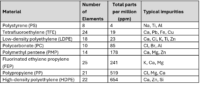
Some polymers, including polypropylene and polyethylene, can contain significant concentrations of alkali metals, alkaline-earth elements, transition metals, and other elements, as exemplified in Table 3, which is taken from a study that provides an excellent illustration of the problem. In addition, additives, plasticizers, coloring agents and mold-release agents can introduce additional metals.
Table 3: Trace metals found in common plastic and polymer materials
Other Evidence in the Public Domain
Other studies have investigated toxic-metal concentrations in plastic materials used for food packaging.
Although the results do not necessarily establish that the metals actually leach into food, they provide compelling evidence that a broad range of metallic impurities can be present in plastic and polymer materials.
One particularly relevant study investigated heavy metals and metalloids in various types of plastic bags. The researchers examined polyethylene, HDPE, LDPE, and PVC materials and used closed-vessel microwave digestion followed by ICP-OES analysis.
The results demonstrated that many elemental impurities were present at concentrations in the tens of parts per million, while some elements—including copper, zinc and barium—were present at concentrations exceeding 100 ppm. A subset of this data is shown in Table 4.
The results were not isolated to a single material, as similar findings were obtained from other types of plastic bags.
Table 4: A panel of elemental impurities found in polythene bags (results in mg/kg)

These concentration levels are quite significant. But again, there is an important distinction. The presence of metals in a plastic material does not automatically mean that those metals will migrate into a cannabis product. Without an appropriate extractables study, we do not know the answer to that question.
What Does This Mean for the Cannabis and Hemp Industry?
This brings us to the key question. What are the implications for cannabis producers?
The pharmaceutical industry has spent decades developing a comprehensive approach to elemental impurities. The ICH Q3D risk-assessment framework considers potential sources throughout the manufacturing process, including:
- raw materials
- manufacturing equipment
- water
- container-closure systems
- drug substances
- excipients
- packaging
- processing steps
Plastic materials therefore become one component of a much larger risk-assessment strategy.
A classic way to visualize this is with a fishbone—or Ishikawa—diagram, designed to identify potential root causes of elemental contamination, as shown in Figure 1.
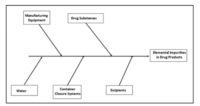
Figure 1: Classic fishbone diagram of the pharmaceutical manufacturing process to identify the root cause of a problem to better understand elemental impurities in drug products.
A Cannabis Elemental-Impurity Risk Assessment
So, the question is, could this approach be adopted by the cannabis industry? Every stage of the cannabis production process, including cultivation, extraction processing, manufacturing, packaging, and delivery, could potentially contribute elemental contaminants. And in particular, what plastic components and materials are most likely to be leaching metals when in contact with the multitude of chemicals and solvents used in the extraction process, as well as cannabinoids, terpenes, and diluents used in the formulation of the cannabis consumer products? A proposed fishbone diagram for the cannabis manufacturing process is represented in Figure 2.
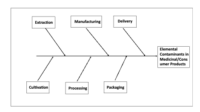
Figure 2: Proposed classic risk assessment fishbone diagram for cannabis consumer products
The objective would be to determine which metals could enter the final product at each stage. This approach was proposed in a recent Journal of Testing and Evaluation (JTE) publication that examined the use of a risk-assessment strategy to identify sources of heavy metals in cannabis and hemp products.
The key question is:
Where can the metals come from—and can we demonstrate that each potential source is under control? We know from the published studies that plastic materials can contain measurable concentrations of metals. But what would happen if those same plastic materials were subjected to an extractable metals procedure similar to that used by pharmaceutical manufacturers?
Would the metals actually be released?
What Should Cannabis Manufacturers Do?
In today’s disjointed regulatory environment, there is no clear guidance for cannabis producers. However, if a similar situation occurred in a pharmaceutical manufacturing plant, the plant would be expected to investigate the potential source of elemental contamination due to the industry’s regulatory framework and FDA oversight. For cannabis manufacturers, however, there is currently no comparable requirement to conduct such a systematic evaluation.
As a result, a potentially important source of contamination could be escaping scrutiny.
The pharmaceutical approach provides a useful model. Cannabis manufacturers could develop their own risk-based extractables and leachables testing program for plastic components that come into contact with cannabis extracts and finished products.
For example, instead of using extraction conditions developed for pharmaceutical manufacturing, cannabis-specific studies could investigate commonly used cannabis formulations, diluents, solvents, and carriers, including:
- MCT (medium-chain triglycerides) oil
- glycerin
- propylene glycol
- ethanol
- terpenes
- hemp seed oil
- vegetable oil
Plastic components could be exposed to these materials under controlled conditions and subsequently analyzed for relevant elemental impurities using ICP-MS or ICP-OES. The results could then be incorporated into a broader elemental-impurity risk assessment.
This would allow manufacturers to move from simply asking: “Is this plastic food grade?”….to asking a much more scientifically meaningful question: “Have we demonstrated that this plastic is suitable for its intended use with our cannabis product?”
Final Thoughts
With the current state-driven regulatory system, there is very little incentive to fully understand the sources of heavy metals throughout the cannabis production process—or in the final consumer products. And in particular, there is no reason to look beyond the “big four” if state regulators don’t require it. However, there is compelling evidence in the public domain that additional metals could be leaching from plastic materials, particularly when cannabinoid extracts and oils are stored in them for extended periods.
But there has not yet been enough testing to definitively establish the extent of the problem. A suitable leaching procedure could be developed based on approaches already used by pharmaceutical manufacturers. But instead of extraction protocols described in USP Chapter <661>, cannabis-specific protocols could use common diluents used in cannabis formulations to investigate extractable metals from plastic components.
At present, there are no comprehensive state regulations requiring cannabis producers to address this issue. So, until the industry adopts a meaningful risk-assessment approach, we simply don’t know whether plastic materials are a significant source of elemental contamination in cannabis products.
We can only hope that when the industry eventually comes under the scrutiny of federal regulators, we might find out the answer. But until then, we can only keep on asking the questions….and maybe someone is listening!
The post What Cannabis Manufacturers Can Learn from the Pharmaceutical Industry About Trace Metal Impurities in Plastic Materials appeared first on Cannabis Industry Journal.