
The advocacy group Americans for Safe Access (ASA) has launched a new resource centre focused on organ transplantation and medical cannabis, following the death of patient Patrick Navarro, whose case has reignited concerns over discrimination in transplant eligibility.
Patrick, who used cannabis to treat severe neuropathic pain, was denied a lung transplant by the University of California, San Francisco (UCSF), with the committee citing concerns about his “long-term marijuana use” and the “ability to maintain durable abstinence” post-transplant.
A previous pancreas and kidney transplant recipient, Patrick, was hospitalised with acute lung failure in March 2026. As his condition worsened, his family was told that, because of his medical cannabis use, he would need to demonstrate six months of abstinence before he could be considered for the lung transplant list.
His wife, Cindy, reached out to ASA after his transplant was declined on 6 March. Patrick died on 23 March, aged 41.
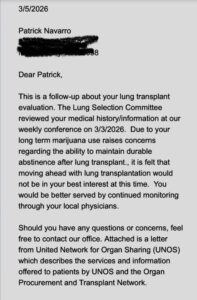
Patrick was denied a lung transplant by the University of California, San Francisco (UCSF).
A hidden problem
Campaigners at the organisation say his story puts a human face on a hidden problem that many families do not discover until it is too late.
Even in states with medical cannabis laws, transplant programme policies can be inconsistent, unclear, or shaped by stigma, they say, with delays, abstinence mandates, waitlist inactivation, and denials still too common.
Patrick’s case was the catalyst for ASA’s Stigma with a Body Count: Medical Cannabis & Organ Transplant Policies report, which found that transplant access for medical cannabis patients is still shaped by stigma rather than clinical evidence.
The report revisits the case of Norman Smith, a California patient with liver cancer who was removed from the transplant list after testing positive for THC, despite using cannabis under medical guidance.
Smith’s death inspired ASA to lobby for the California Medical Cannabis Organ Transplant Act, enacted in July 2015, to protect patients from discrimination.
However, the report finds that, more than a decade later, ‘outdated assumptions’ continue to shape access to organ transplantation for medical cannabis patients, creating obstacles that can impact referrals, evaluations, waitlisting, active-list status, and aftercare.
Policies vary widely between programmes, the authors say, and many obstacles stem from ‘institutional confusion between medical cannabis use and substance-use disorder’.
A tool for change
For patients with end-stage organ disease, delays or barriers to treatment can have life-threatening consequences.
“Patrick’s life mattered, and so does the truth about what families like ours are forced to face,” said Cindy Navarro.
“We do not want other patients and families to go through this without information, support, or someone standing with them. By sharing Patrick’s story, we hope to help protect others and push for change.”
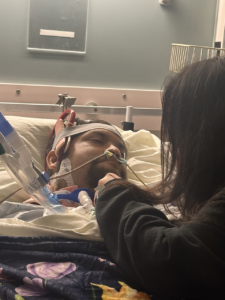
Patrick was hospitalised in March with acute lung failure. Photos provided by the Navarro family / Americans for Safe Access.
In honour of Patrick, Cindy, and their family, ASA has launched the Navarro Family Organ Transplant Resource Center, a new national hub for patients, caregivers, advocates, attorneys, and healthcare professionals seeking information and support on medical cannabis and organ transplantation.
Steph Sherer, Founder and Executive Director of Americans for Safe Access, said: “Patrick Navarro’s death is a heartbreaking loss, and we are honouring his life by making sure other families do not have to face these challenges alone and in the dark.
“Patrick, Cindy, and their family helped expose a hidden form of discrimination that has gone unchallenged for far too long. This Resource Center is both a tribute to their courage and a tool for change.”
Patients urged to speak up
ASA is also urging patients, caregivers, and families who have experienced discrimination related to medical cannabis and organ transplantation to come forward. Stories from the public are critical to documenting the scope of the problem, raising awareness, and advancing policy change.
“If this has happened to you or someone you love, please speak up,” Sherer added.
“Too many families have been isolated by fear, confusion, and time pressure. Reporting these experiences helps expose patterns of discrimination and builds the case for evidence-based reform.”
Cannabis Health contacted UCSF for comment, but did not receive a response.
The post Death of Medical Cannabis Patient Highlights Ongoing Stigma in Organ Transplant Programmes appeared first on Cannabis Health News.
Go to Source
Author: Sarah Sinclair